04 · SUBSECTIONCranial Sensor & Cognition Skull
Mouth & tongue — speech and chemoreception
Bone-conduction speech array and a 5-class e-tongue with bio-affinity strip.
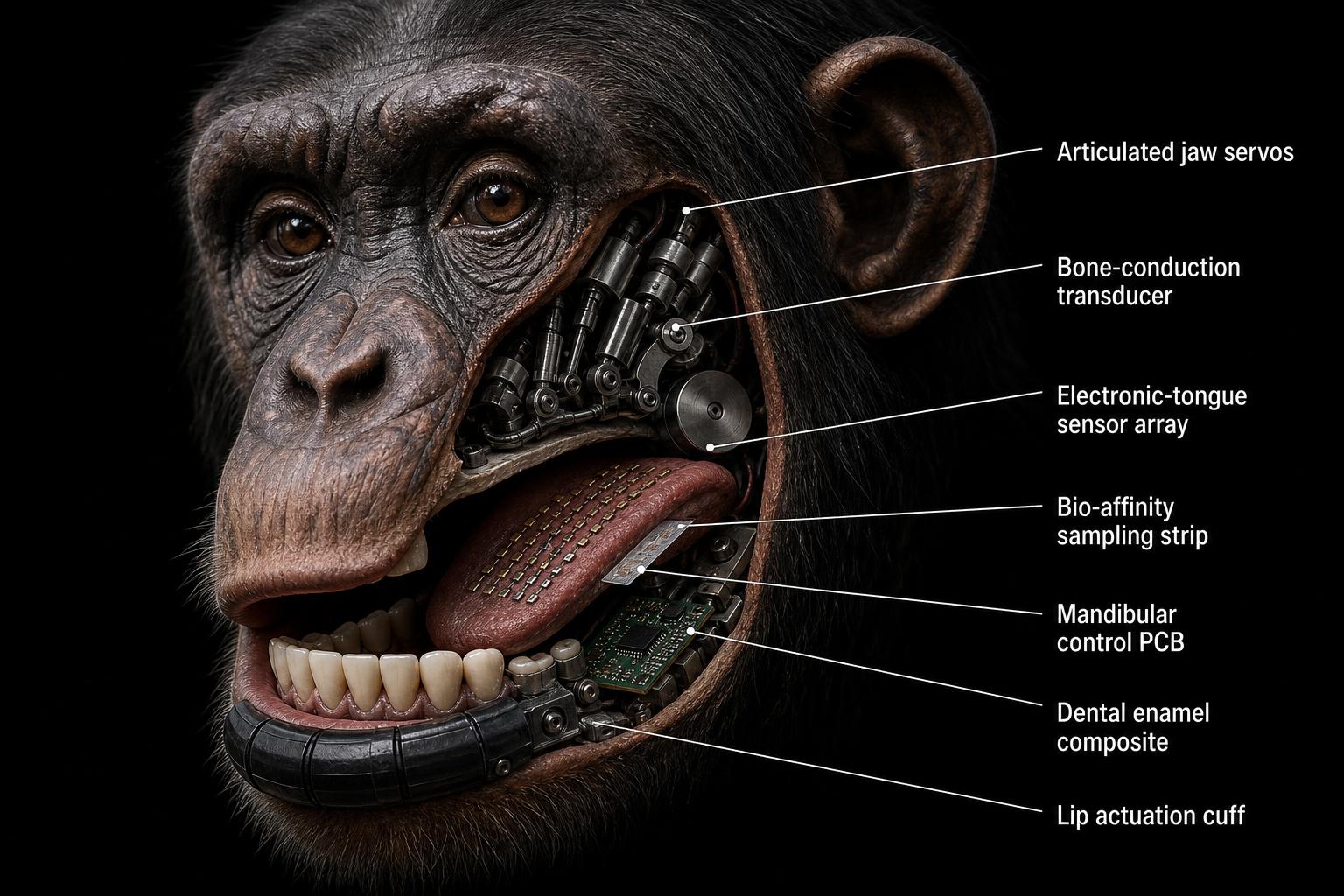
The mouth carries a 2-driver bone-conduction-plus-air-radiation speaker array tuned for natural vocal formants from 80 Hz to 12 kHz, and a soft silicone tongue that articulates lip-sync visemes for face-to-face conversation.
Embedded in the tongue is a chemoreceptive sensor strip — a miniaturised electronic-tongue ("e-tongue") with five functional receptor classes that parallel mammalian taste buds:
- Ion-selective electrodes (T1R-analogue): sweet, sour and umami profiles for food freshness.
- Bitter / alkaloid sensors (T2R-analogue): alkaloid signatures of common toxic plants, spoiled milk and many household poisons (paracetamol, antifreeze, bleach).
- pH micro-electrode: acidic spoilage (rancid fats, off dairy) and caustic substances.
- Conductivity / salt cell: brine and electrolyte balance.
- Bio-affinity strip: a swappable lateral-flow patch that screens for E. coli, Salmonella and Listeria antigens on a wipe of a kitchen surface or a swab of suspect food.
The companion does not eat. The tongue is a contact-test instrument: present a glass of milk, a strange berry from a child's pocket, an unmarked bottle from a grandparent's cabinet, and the head returns a safe / unsafe verdict in under three seconds.
SPSpecifications