03 · SUBSECTIONCranial Sensor & Cognition Skull
Nose — hazardous-gas olfaction
Electrochemical + MOS sensor array — CO, methane, smoke, VOCs, H₂S, NH₃, NO₂.
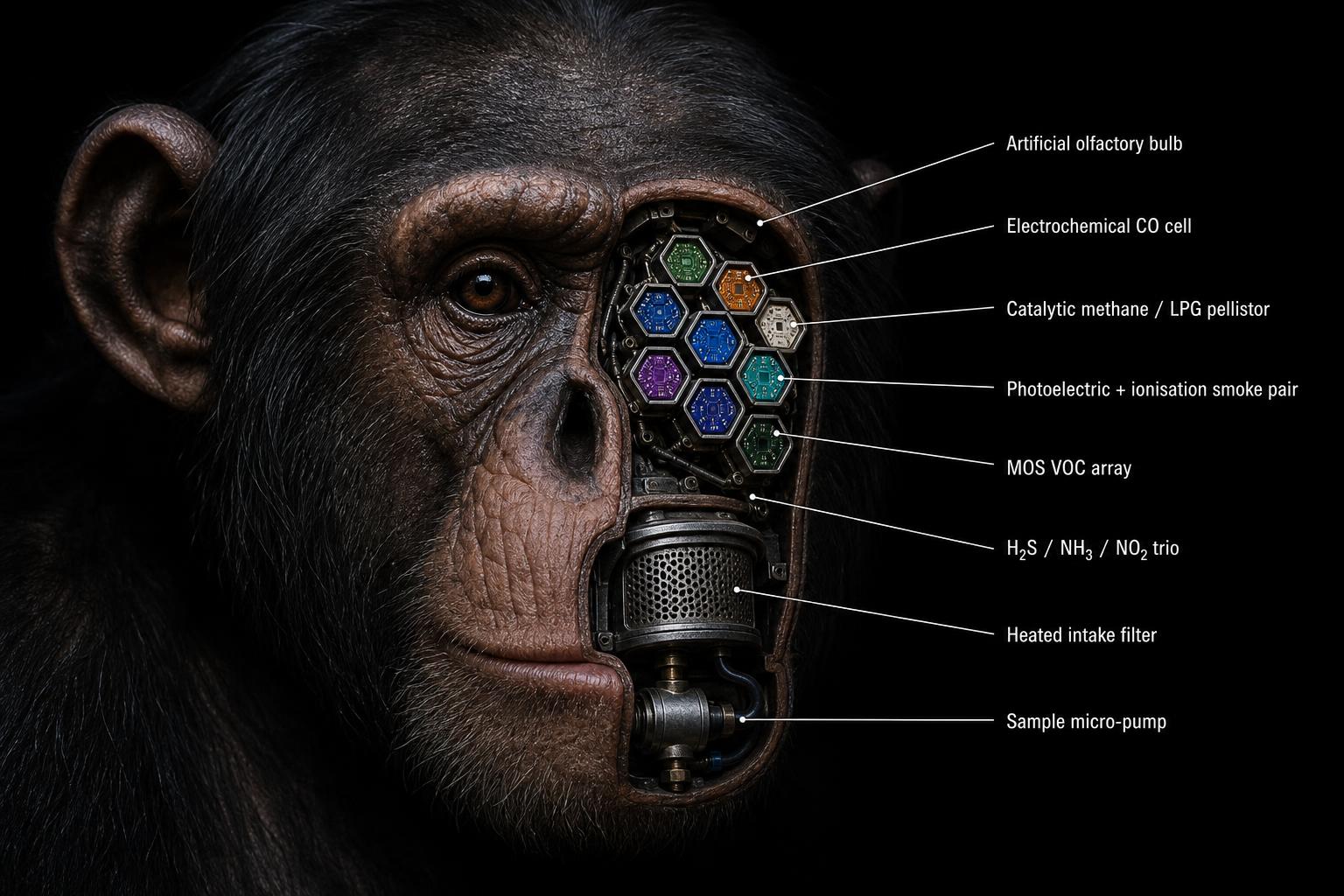
The nasal cavity houses an array of electrochemical and metal-oxide-semiconductor (MOS) sensors arranged as an artificial olfactory bulb. Each sensor responds across a chemical fingerprint, and a learned classifier identifies the molecule from the response pattern — the same principle as a mammalian nose.
- Carbon monoxide (CO): electrochemical cell, 0–500 ppm, alarm at 30 ppm. Odourless and lethal; this is the most important sensor in the head.
- Natural gas / methane & LPG: catalytic pellistor, alarm at 10 % of the lower explosive limit.
- Smoke & combustion particulates: dual photoelectric + ionisation, distinguishing smouldering upholstery from fast-flame kitchen fires.
- Volatile organic compounds (VOCs): MOS array for solvents, alcohols, refrigerant leaks.
- Hydrogen sulphide, ammonia, NO₂, ozone: dedicated electrochemical cells for industrial and medical environments.
Trace-detection sensitivity reaches single-digit parts-per-million; CO is detected an order of magnitude below the threshold at which a human notices symptoms.
SPSpecifications