← Back to 09Home · The FourAll Dossiers
A2 · DOSSIERPrehensile Pedal System

Feet.

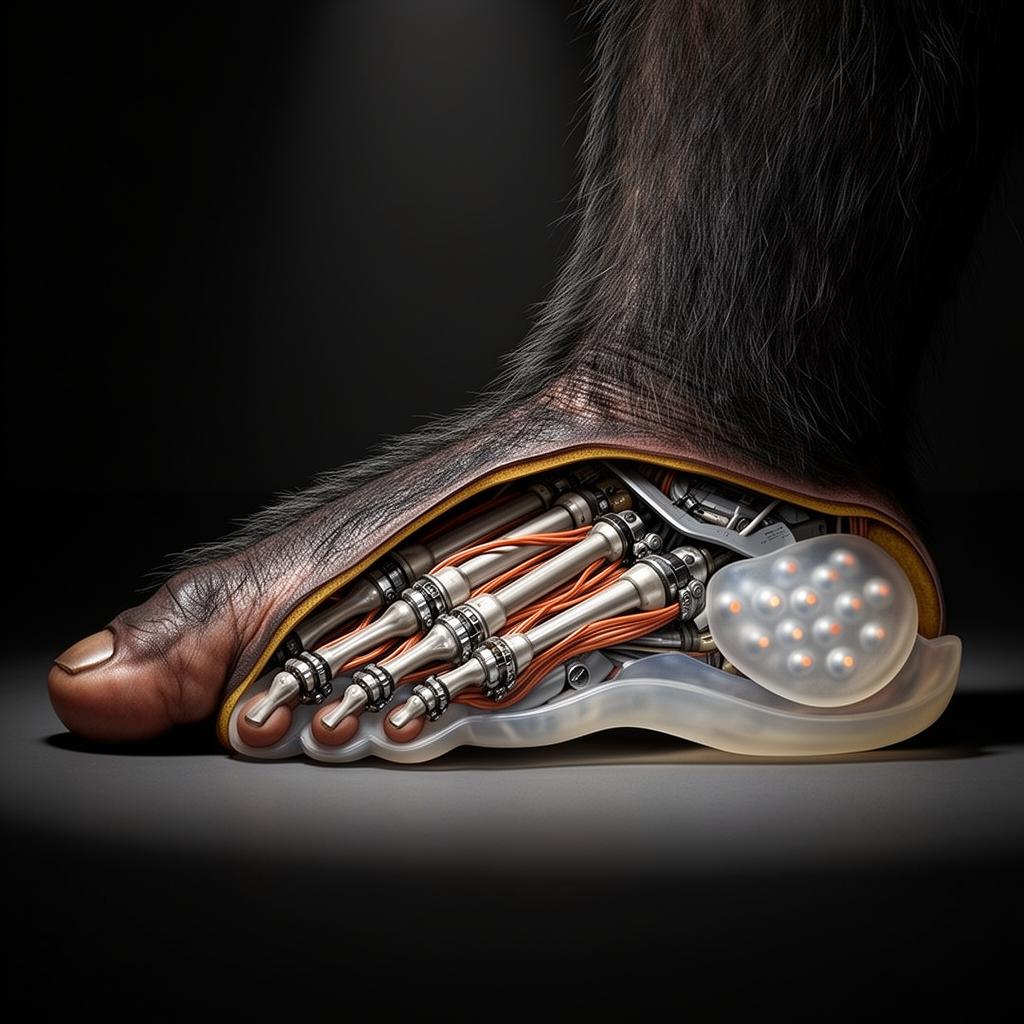
A foot is a sense organ as much as a base of support. Synara's feet borrow the chimpanzee blueprint — an opposable hallux, long flexible toes, a richly innervated sole — and re-engineer it for grip on stairs, rugs, polished tile and wet bathroom floors.

Feet. — engineering reference
01Prehensile Pedal System

Opposable hallux
Opposable hallux

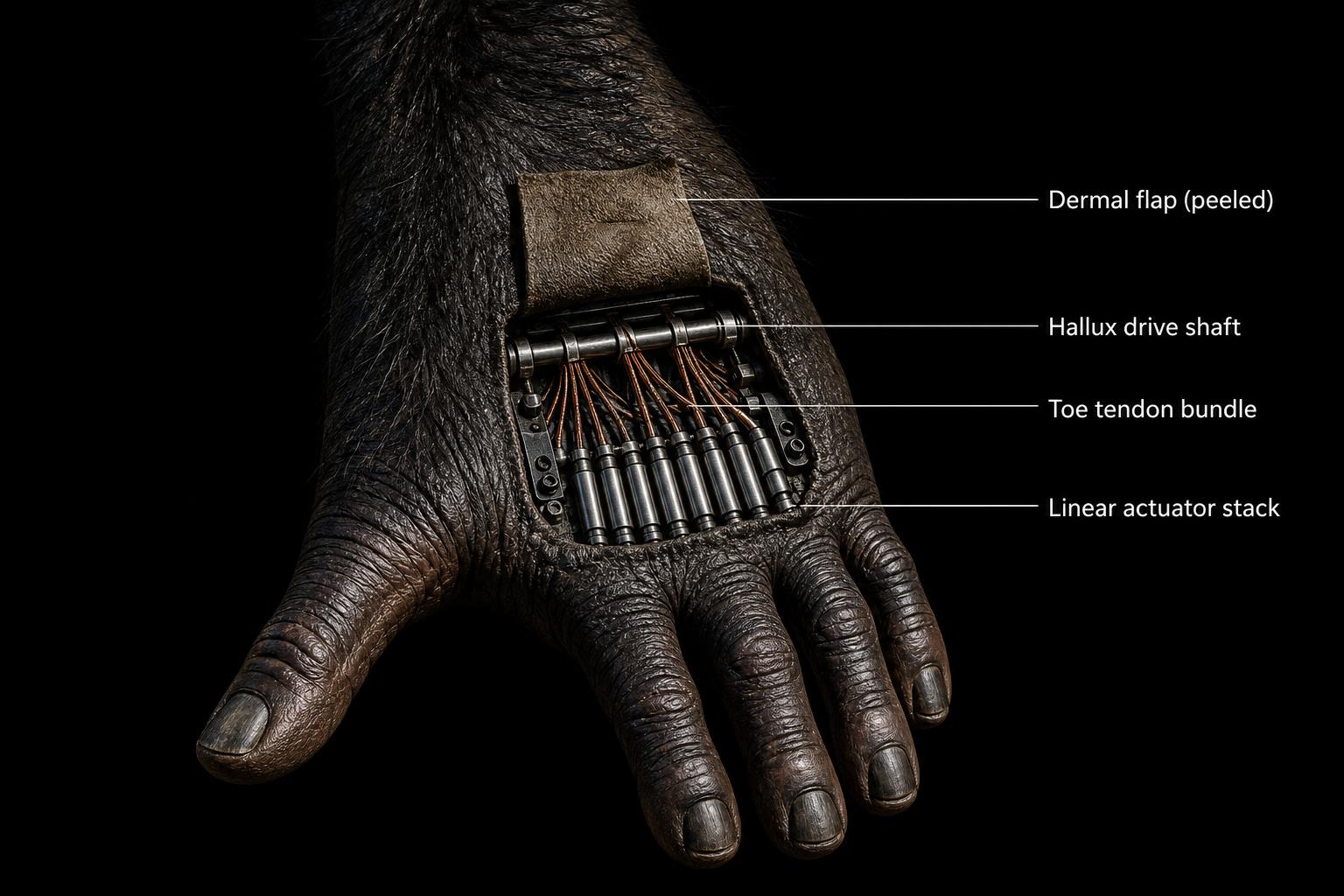
The big toe sits at roughly 35° to the others and can rotate against them with a peak pinch force of 40 N. This lets the companion grasp a handrail, stabilise itself on a kerb, or wrap a foot around a beam during canopy work on enterprise units.
Read full subsection →
02Prehensile Pedal System

Tactile sole

Tactile sole

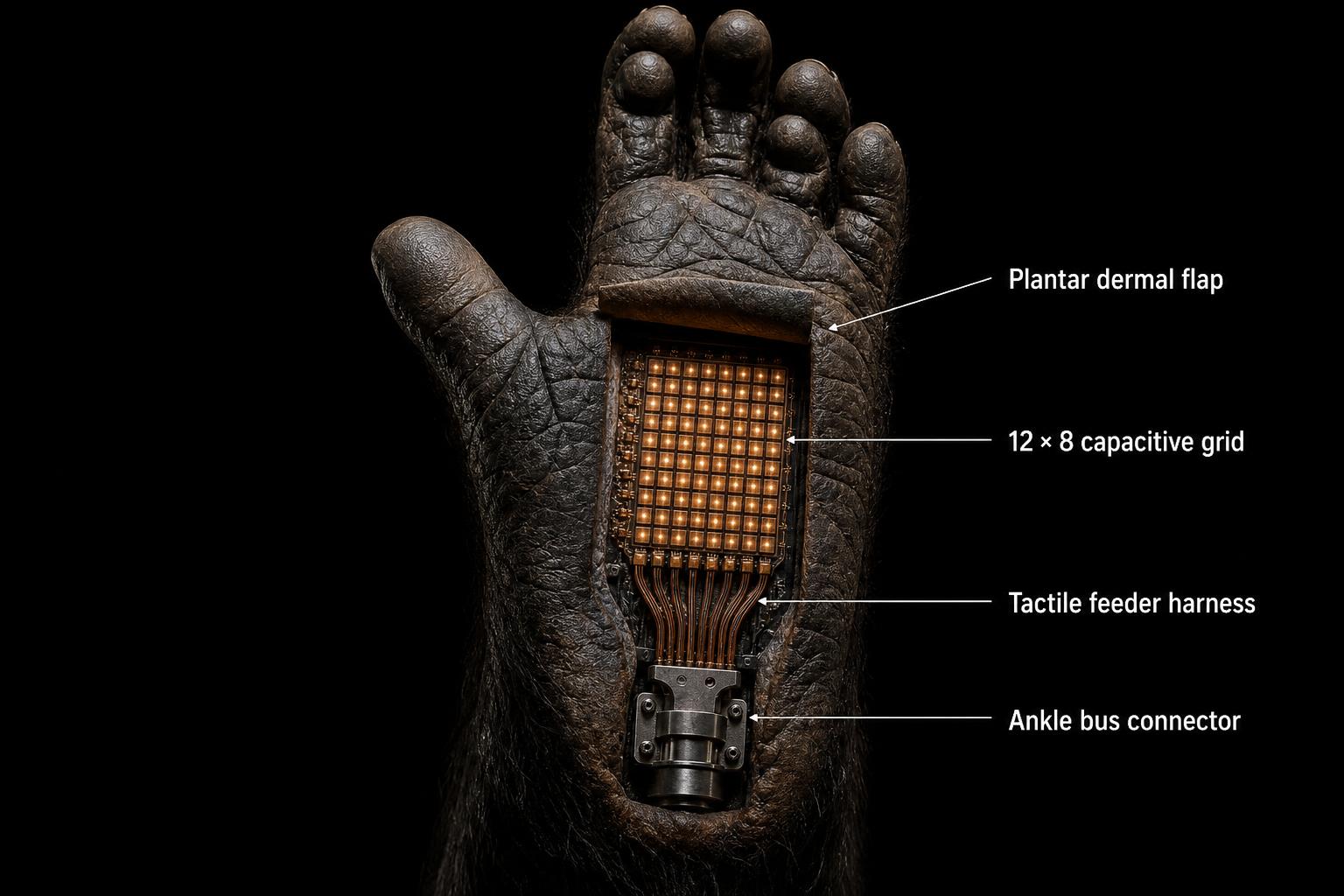
The plantar surface carries 96 capacitive pressure cells in a 12 × 8 grid, sampled at 1 kHz. The control loop reads the centre-of-pressure map continuously and tilts the ankle to keep it inside the support polygon.

The result is a foot that "feels" the ground: a marble, a sock, a wet patch and a stair edge are all registered before the next step lands.

Read full subsection →
03Prehensile Pedal System

Silicone tread

Silicone tread

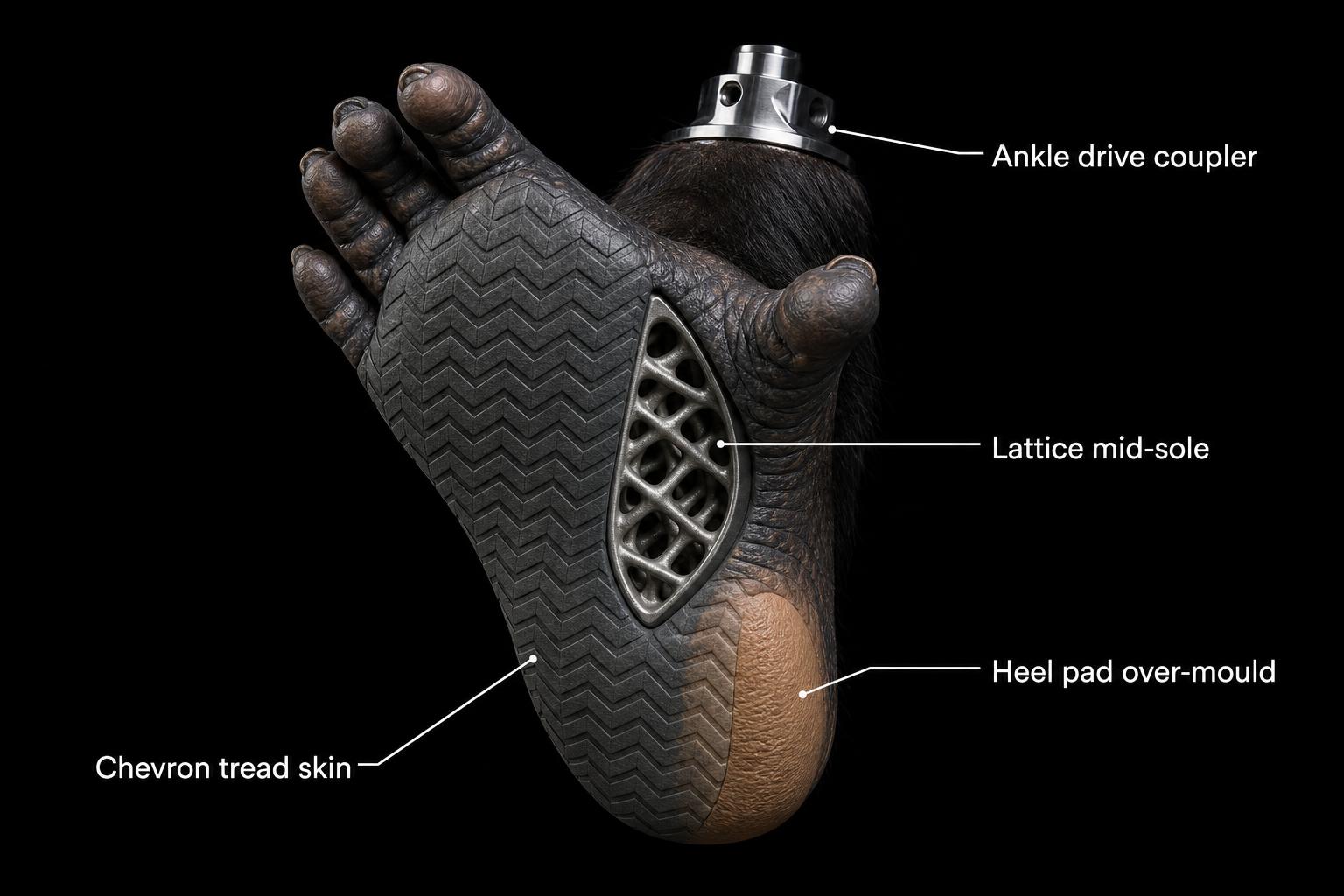
The sole is moulded in 65-Shore-A silicone with a chevron tread tuned for hardwood and stone, then over-moulded with a softer 30-Shore-A heel pad for acoustic damping. Footfall sound at 1 m measures below 38 dBA — quieter than a barefoot human.

Read full subsection →
SPSpecifications
Toes per foot
5 (4 + opposable hallux)
Hallux pinch force
40 N peak
Plantar sensors
96 cells, 1 kHz
Footfall sound (1 m)
≤ 38 dBA
Wet-floor coefficient
μ ≥ 0.6
Max step rise
220 mm
← All DossiersHands →